Car Making Clicking Noise When Turning: CV Joint Cost
Quick answer: A car that clicks when turning often has a worn outer CV joint, especially if the clicks repeat as the wheels turn in a tight circle. If the noise is mild and the car drives normally, you can usually make a short trip to a repair shop. Stop driving if the noise becomes severe, the car vibrates badly, or it loses power.
Why a car clicks when turning
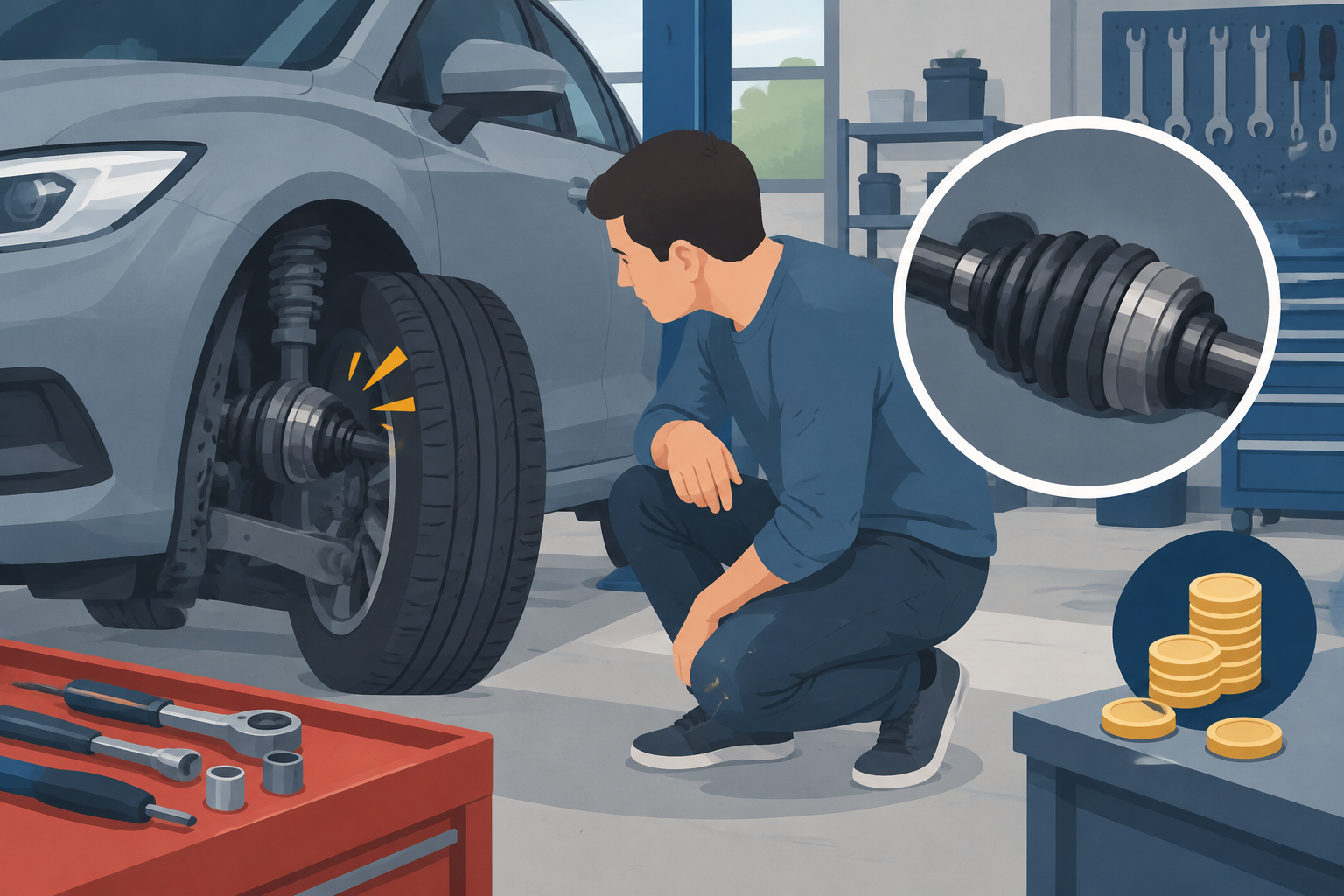
The most common cause of a repeated click during a tight turn is wear in an outer constant velocity joint, often called a CV joint. CV joints send power to the wheels while letting the front wheels steer and move with the suspension.
A rubber boot covers each joint and holds in grease while keeping out dirt and water. When the boot cracks or its clamp loosens, grease can leak out and grit can get in. The joint may then wear until it clicks under the extra load of a turn.
A mechanic may replace the complete CV axle, which includes the shaft and joints, rather than rebuilding one joint. The right repair depends on the vehicle and how much damage has occurred.
How to tell a CV joint click from other noises
Worn outer CV joint
A CV joint often makes a steady series of clicks or snaps while you move slowly through a tight turn. The sound may speed up as the wheels turn faster, and it may be louder in one direction than the other. That pattern points toward a CV joint, but it does not confirm which part has failed.
Look through the wheel opening for a torn boot or grease spattered on the inside of the wheel or nearby suspension. Do this with the car parked on level ground and the engine off. Never crawl under a car held up only by a jack.
Pebble or debris in a tire
A small stone caught in the tread can make a regular tick as the tire rolls. The sound usually continues when you drive straight and changes with road speed. A CV click mainly appears during tight turns.
With the car parked, check the visible tread for a loose pebble. Do not pull out an object that could be a nail or screw, since removing it can let air escape. If the tire is losing pressure, follow the steps in our guide to the tire pressure warning light.
Strut mount or suspension noise
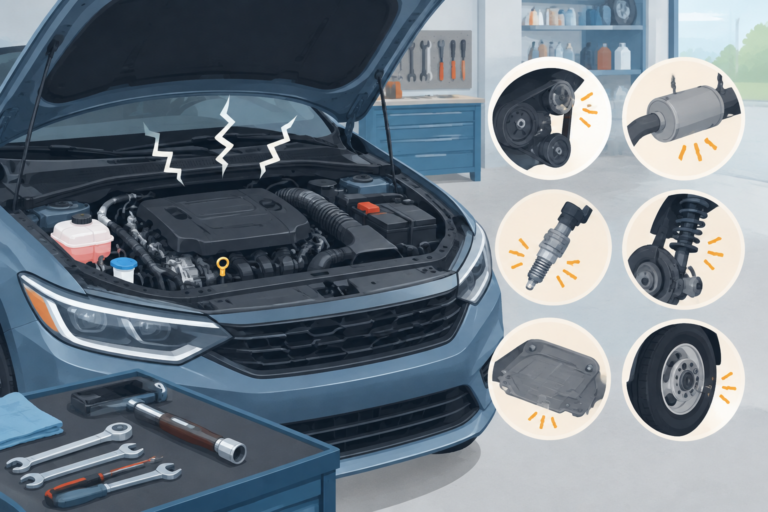
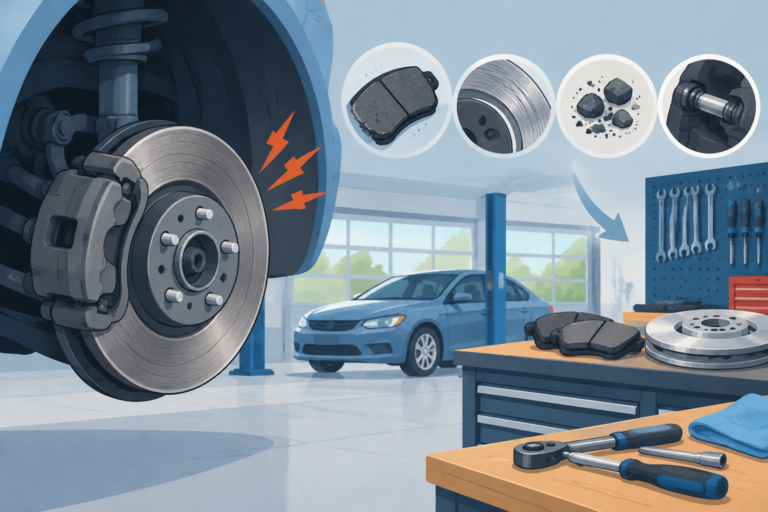
A worn strut mount or another steering or suspension part can click, creak, or knock as the wheels turn. The sound may happen while the car is stopped and you turn the wheel, or when the suspension passes over a bump. A CV joint usually clicks as the car rolls through the turn.
Suspension noises can be hard to pin down from the driver’s seat. If the sound comes with loose steering, a change in ride height, or a clunk over bumps, tell the shop. For other common sounds, see our guide to a car making a rattling noise.

A simple turning test
A slow test in an empty, flat parking lot can help you describe the sound. It cannot prove that a CV joint is bad, because tires and suspension parts can make similar noises.
- Make sure the area is clear of people, parked cars, and obstacles. Keep the windows down so you can hear the wheels.
- Drive at walking speed in a wide circle, then make a tighter circle in the same direction. Avoid hard acceleration and do not force the wheel against its stop.
- Stop, then repeat in the other direction. Note whether the click appears only during turns, which direction makes it louder, and whether it changes with speed.
- Stop the test if the car shakes, the steering feels wrong, or the noise turns into a loud clunk or grinding.
Give those details to the mechanic. A shop can inspect the boots and joints, check for looseness, and road-test the vehicle if it is safe to do so. A single click when shifting into gear or pulling away may have a different cause, so mention when it happens. Our guide to a car vibrating at highway speed covers a separate symptom that can help you describe what you feel.
CV axle replacement cost
As a rough US estimate, replacing one CV axle commonly costs about $300 to $1,000, including parts and labor. The total depends on the vehicle, axle design, local labor rates, and whether the shop uses an original-equipment or aftermarket part.
- Parts: about $100 to $500 for an axle assembly.
- Labor: about $150 to $400, depending on access and local shop rates.
- Extra work: a damaged seal or seized fastener can add to the bill.
These are estimates, not a quote. Some vehicles cost more, and prices vary by area. A boot replacement alone may cost less in parts, but the labor can still be substantial. If the joint has already been clicking for a while, a new boot may not restore it.
Ask the shop which side needs work and whether the quote covers the axle, hardware, labor, and any related seal. You can also ask to see the old axle. A clear diagnosis should tie the noise to a specific worn or damaged part.
Can you keep driving?
If the clicking is mild, the car steers and accelerates normally, and there is no strong vibration, a short, careful drive to a repair shop is usually reasonable. Book an inspection soon, since continued driving can wear the joint further.
Arrange a tow if the clicking becomes loud, the car shudders or pulls, steering gets hard, or the wheels stop receiving power properly. A badly damaged axle can leave the car unable to move, and driving with a serious steering or driveline problem is unsafe.
Do not reach near moving parts to listen for the sound or try to repair a loaded suspension component at home. A mechanic can raise and support the vehicle correctly and check the axle and nearby parts safely.
Frequently asked questions
Does a clicking sound always mean a bad CV joint?
No. A CV joint is a common cause when the click repeats during a tight turn, but tire debris and steering or suspension parts can also click. The sound pattern and an inspection help narrow it down.
Can a bad CV joint damage other parts?
A worn joint keeps deteriorating, and a damaged boot lets grease escape and dirt enter. Have it checked before the noise gets severe or the car starts to vibrate.
Can I replace only the CV boot?
Sometimes, if the boot is damaged and the joint has not worn or become contaminated. If the joint already clicks, the shop will often recommend replacing the whole axle assembly. Ask the mechanic to explain the condition of the joint.
How long does a CV axle last?
No single mileage applies to every car. Boot condition, road debris, driving conditions, and vehicle design all affect how long the joint lasts. A torn boot or grease around the wheel is a reason to schedule an inspection.
A repeating click in a tight turn often points to an outer CV joint. An inspection can confirm the cause before the axle gets worse.
This guide is general information. For safety-critical repairs, have your vehicle inspected by a certified mechanic.