
Tire Pressure Light On? What to Do and When It’s Serious
Quick answer: A steady tire pressure light means at least one tire is low on air. Pull over safely, check all four tires with a gauge, and inflate to the number on your driver’s door jamb. A flashing light usually points to a sensor fault. If a tire looks visibly flat or damaged, stop driving.
What the tire pressure light means
The light looks like a flat-bottomed horseshoe with an exclamation point inside. It belongs to your Tire Pressure Monitoring System, or TPMS. The system warns you when a tire has lost enough air to affect safety, typically when pressure drops about 25% below the recommended level.
Low tires wear out faster, cut your gas mileage, and handle poorly in a turn or a hard stop. An underinflated tire also runs hotter, which raises the risk of a blowout at highway speed.
Two things commonly trigger the light. One is a slow leak from a nail, a worn valve stem, or a rim that doesn’t seal well. The other is cold weather. Tire pressure drops roughly 1 psi for every 10°F drop in temperature, so the light often shows up on the first cold morning of the season.
What to do right away
Don’t ignore it, but don’t panic. Most of the time the fix takes a few minutes with an air hose. Start with a quick look at the situation.
- Check how the car feels. A pull to one side, a wobble, a thumping sound, or a heavy steering wheel can mean a tire is very low or flat.
- Pull over somewhere safe if anything feels off. Use a parking lot or a wide shoulder, away from traffic.
- Walk around the car. Look for a tire that sits visibly lower than the others, a bulge on the sidewall, a nail or screw in the tread, or a cut.
- If a tire looks flat or damaged, don’t drive on it. Put on the spare or call roadside assistance.
- If everything looks normal, drive slowly to the nearest gas station or tire shop and check the pressure with a gauge.
A tire that is only a few psi low is generally fine for a short, gentle trip to an air pump. A tire that is very low or flat can be ruined within a mile or two. Driving on it can destroy the sidewall, and then a simple patch won’t work.

How to check each tire with a gauge
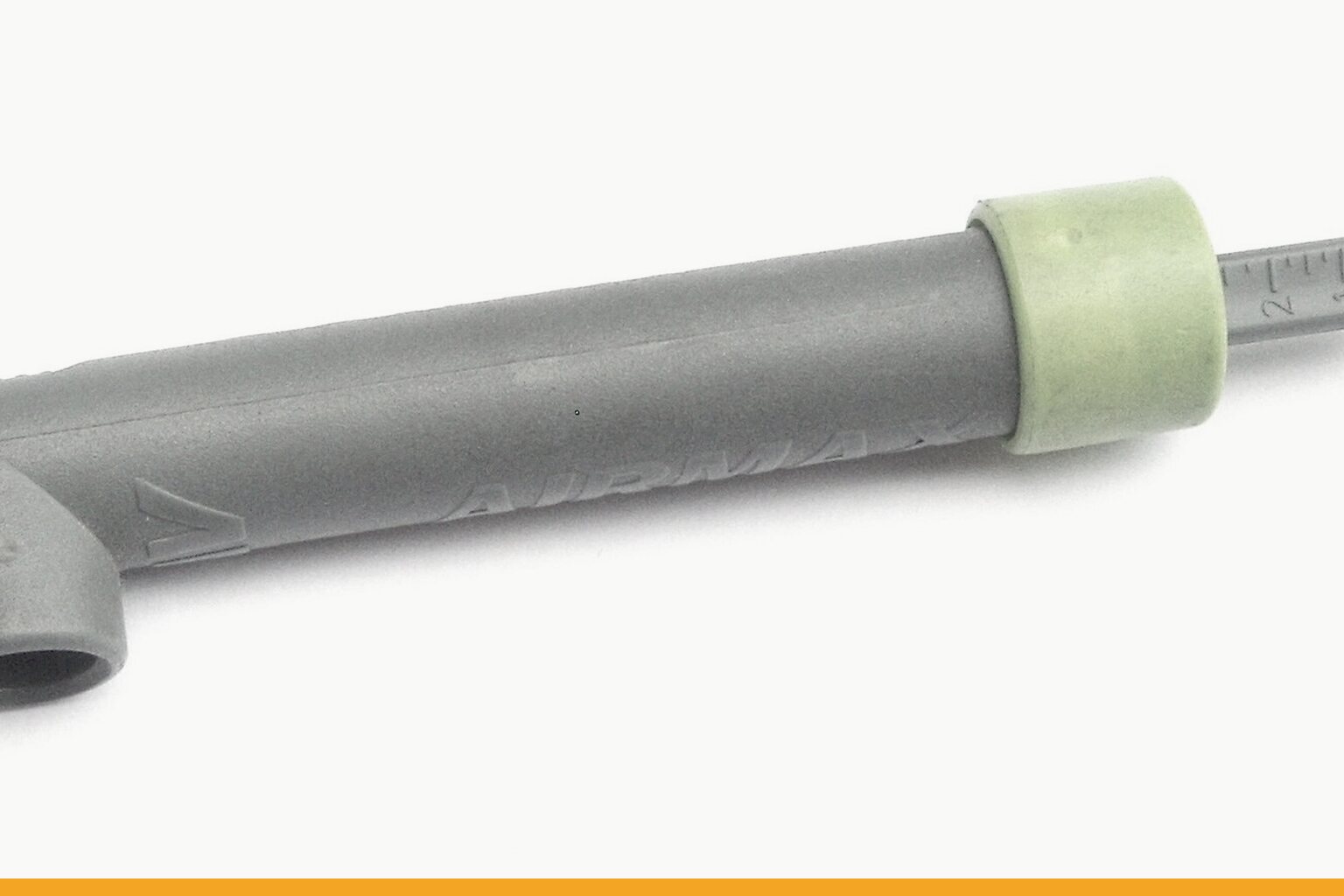
The light doesn’t tell you which tire is low, and some cars don’t show it on the dash. A gauge costs a few dollars at any auto parts store, and a digital one is easy to read. Keep one in the glovebox.
Find the right pressure
Open the driver’s door and look for the tire placard on the door jamb. It lists the recommended cold pressure for the front and rear tires, in psi. Your owner’s manual has the same numbers.
The number printed on the tire sidewall is the tire’s maximum. Use the door jamb figure for everyday inflation.
Check the tires cold
Check the pressure when the tires are cold, meaning the car has sat for a few hours or has been driven less than a mile. Driving heats the air inside and gives a higher reading. If you drove several miles to reach an air pump, expect the reading to run a few psi high and adjust for it.
Step by step
- Unscrew the valve cap on one tire and keep it in your pocket.
- Press the gauge firmly onto the valve stem until the hissing stops.
- Read the number and compare it with the door jamb figure.
- Add air in short bursts, rechecking as you go. If you overfill, press the center pin of the valve briefly to let air out.
- Replace the cap, then repeat for the other three tires.
Check the spare too if your car has a full-size or compact spare with a valve. Many drivers forget it until the day they need it. Some cars don’t monitor the spare at all, so the light won’t warn you about it.
For more on tire safety basics, the National Highway Traffic Safety Administration has a page on tire safety.
How to reset the tire pressure light
On many cars, the light turns off by itself once the tires are at the right pressure and you’ve driven for a while. Ten to twenty minutes at highway speed is a common range, though the exact rule varies by make and model. If the light is still on after that, one of the following may apply.
- Reset button. Some cars have a TPMS reset button under the steering wheel, in the glovebox, or near the fuse panel. With the key on and the engine off, hold it until the light blinks three times, then start the car.
- Menu setting. Many newer cars let you reset through the dash or touchscreen settings. Look under vehicle or tire settings.
- Drive cycle. Cars with an indirect system, which uses wheel speed sensors, often need a reset after inflating. Your owner’s manual explains the exact steps for your car.
If you can’t find the procedure, check your owner’s manual. The steps differ enough between brands that guessing can waste time.
Resetting the light doesn’t fix a leak. If it returns within a few days, a tire is losing air and needs a proper look.
Steady light versus flashing light
A steady light
A steady light means the system sees at least one tire below the threshold. This is the common case, and the fix is usually air. Check all four tires, because the light can come on when only one is low.
A tire can lose pressure on a cold night and still look normal to the eye. A tire can be 10 psi low and look only slightly soft. The gauge settles it.
A light that flashes, then stays on
If the light blinks for about a minute when you start the car and then stays lit, the system is usually reporting a fault. Common causes include a dead sensor battery, a damaged sensor, a missing sensor after a tire change, or a problem with the receiver. The tire sensors have small batteries that typically last 5 to 10 years.
You can generally drive with this fault, but the system is no longer protecting you. Check your tires by hand more often until the sensor is repaired. If your car is also showing a flashing engine warning, read why a check engine light flashes and what to do, since that one is more urgent.
A light that keeps coming back
If you inflate the tires, reset the light, and it returns within days, suspect a slow leak. A shop can find it by dunking the tire in water or spraying soapy water around the tread, valve stem, and wheel edge. Bubbles show where the air escapes.
To see whether other owners have reported tire or sensor problems with your model, you can check your car for open recalls and owner complaints.
When it is not safe to keep driving
Stop and don’t continue if any of these apply:
- A tire is flat or nearly flat.
- You see a bulge, bubble, or deep cut in the sidewall.
- The car shakes, pulls hard to one side, or makes a thumping noise.
- You hear a rubbing or grinding sound near a wheel. Rule out the tire first, and if the sound is there when you brake, see grinding noise when braking.
- The tire keeps losing air faster than you can add it.
In these cases, put on the spare or call for a tow. A tire driven flat can fail suddenly and cause a loss of control. A damaged sidewall can’t be repaired safely, so the tire has to be replaced.
What repairs may cost
These are rough estimates, and prices vary by region, shop, and vehicle.
| Repair | Typical range (estimate) |
|---|---|
| Tire patch or plug repair | $20 to $50 |
| New valve stem | $10 to $30 per tire |
| TPMS sensor replacement | $50 to $250 per sensor |
| New tire | Varies widely by size and brand |
Many shops patch a tire for free or a small fee if you bought it there. A puncture in the tread can often be fixed. Damage on the sidewall or near the edge generally can’t.
Frequently asked questions
Can I drive with the tire pressure light on?
Yes, for a short trip to check and inflate the tires, as long as no tire looks flat and the car feels normal. Don’t continue for long distances or at highway speed on a low tire.
Why is my tire pressure light on when the tires look fine?
Tires can be several psi low without looking soft. Cold weather is a common cause. A faulty sensor can also trigger the light, so use a gauge to see the actual numbers.
Why did the light stay on after I added air?
Some cars need a short drive to clear the light, and others need a manual reset. If it stays on after that, a tire may still be below the target, the spare may be low, or a sensor may have failed.
Should I set the pressure to what is on the tire sidewall?
No. The sidewall number is the tire’s maximum rating. Use the cold pressure on the driver’s door jamb placard.
Do I need to replace all four sensors at once?
Not always. If sensor batteries are old, a shop may suggest replacing several together to save on labor later. Ask for a quote on one versus all four.
This guide is general information. For safety-critical repairs, have your vehicle inspected by a certified mechanic.
One Comment
Comments are closed.