
Car Making a Rattling Noise? Common Causes and Checks
Quick answer: A car rattling noise often comes from a loose exhaust heat shield, hanger, interior trim piece, or worn suspension part such as a sway bar link. Note whether it happens over bumps, at a certain speed, or as engine rpm rises. Stop driving if the rattle comes with unsafe handling, brake trouble, warning lights, or exhaust fumes.
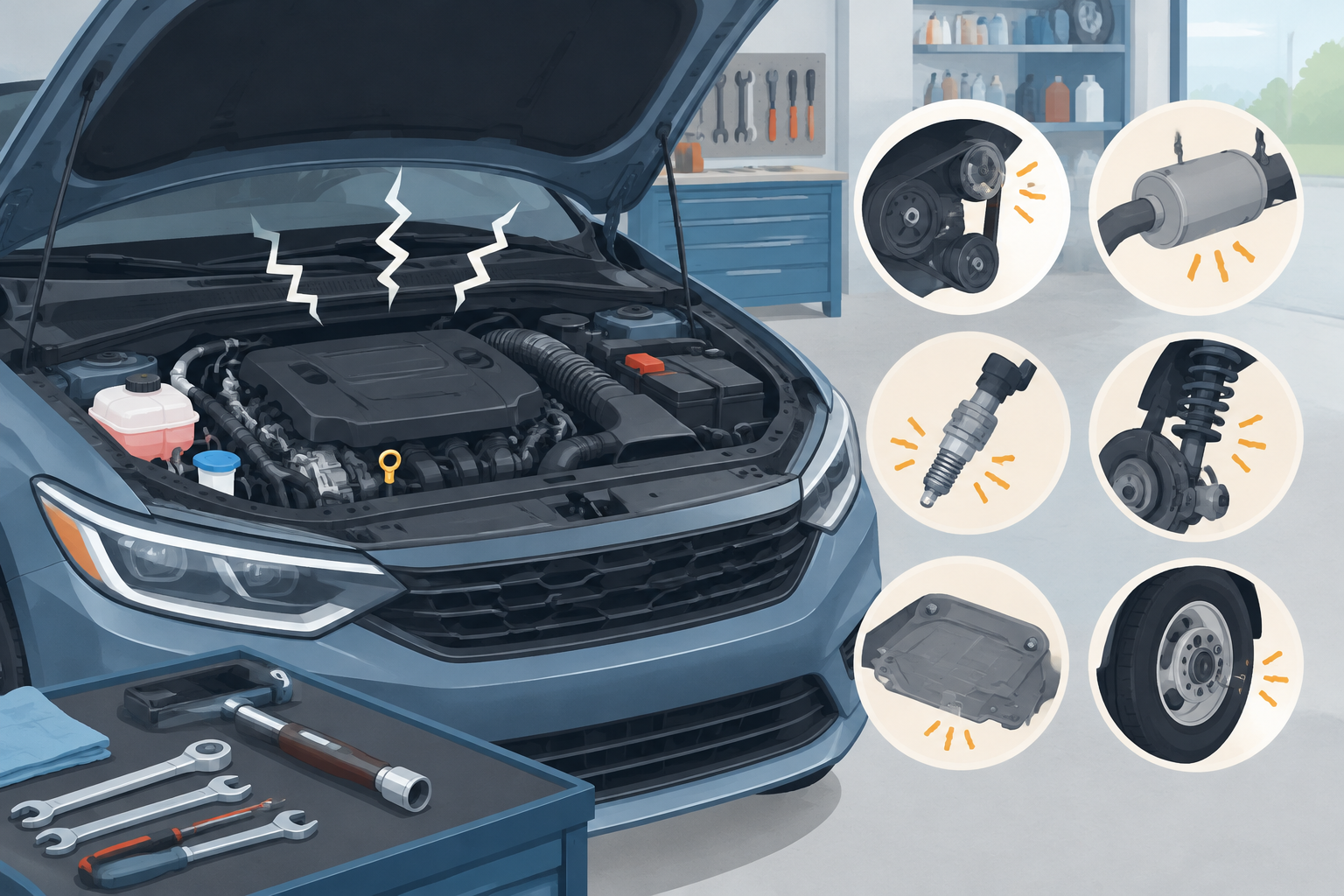
Common causes of a car rattling noise
Rattles can come from parts inside the cabin, under the car, or in the engine bay. When and where you hear the sound can help narrow the possibilities. A mechanic may still need to inspect the vehicle on a lift to confirm the cause.
Loose exhaust heat shield or hanger
A thin metal heat shield can loosen as its fasteners corrode or work free. It may buzz or rattle under the car, often at a particular engine speed. A damaged exhaust hanger can also let the pipe move and tap against nearby parts.
Exhaust parts get very hot, and a loose or damaged exhaust can create a burn or fire risk. Don’t reach under a recently driven car or try to hold a part in place. If the exhaust is hanging low, dragging, or making a sudden change in sound, have the car checked right away.
Loose interior trim or items in the cabin
A glove box, door pocket, seat component, cargo cover, or piece of dashboard trim can rattle over bumps. Items in the trunk or under a seat can sound like a mechanical problem too. Empty loose storage areas and secure cargo before assuming a car part has failed.
Worn suspension parts
Sway bar links and other suspension components can develop play as they wear. A light clunk or rattle over bumps is one possible symptom. Worn bushings, a loose component, or damage from a pothole can also make noise.
A suspension rattle deserves attention if the car also pulls, feels loose, leans more than usual, or has uneven tire wear. For related symptoms, see our guide to car vibration at highway speed.
Brakes, wheels, or engine parts
A loose brake component or debris near a wheel can make a rattle that changes when you brake or turn. Brake noises are hard to identify by sound alone. If you hear grinding, scraping, or a new rattle while braking, read what a grinding brake noise can mean and arrange an inspection.
Engine-area rattles can have several causes, from a loose cover to a problem that needs immediate attention. A rattle that changes with engine rpm, happens at startup, or comes with an oil-pressure warning should be taken seriously. Check the owner’s manual for the correct way to check the oil level. Don’t keep running the engine if the oil-pressure warning stays on.
How to narrow down where the rattle comes from
Pay attention to the conditions when the sound starts. You don’t need to reproduce a noise by driving dangerously or reaching under the car. A few observations can help a repair shop diagnose it.
- Notice the location. Is it near a wheel, under the middle or rear of the car, in the engine bay, or inside the cabin? Sound travels through the body, so treat the location as a clue, not a diagnosis.
- Note the speed. Does it happen only at low speed, at highway speed, or across a wide range? If the sound changes with road speed, a wheel, tire, brake, or underbody part may be involved.
- Listen over bumps. A rattle that appears on rough roads or when crossing a driveway may point to loose trim, cargo, or suspension components.
- Notice whether engine rpm matters. If the rattle changes when the engine revs while the car is parked, tell the shop. Only do this outdoors, with the car parked securely and in Park or Neutral as the owner’s manual directs. Keep people, clothing, and tools away from moving parts.
- Check whether braking or turning changes it. A noise that appears or changes during braking, steering, or a turn is useful information for the mechanic. Don’t make repeated hard stops or sharp turns to test it.
Write down when the sound occurs and whether any warning lights or handling changes appear at the same time. A short recording from a passenger can help, but the driver should keep attention on the road.

What you can check safely
Park on a level surface, switch off the engine, set the parking brake, and let the vehicle cool. Check the cabin and cargo area for loose items, and look from outside for an obviously loose panel or exhaust part. Don’t crawl under a car supported only by a jack, touch hot exhaust parts, or pull on suspension or brake components.
If the tire pressure warning light is also on, check the tires when they are cold and follow the pressure listed on the driver-side door label. Our guide explains what to do when the tire pressure light comes on.
A visual check can miss a loose fastener or worn part. Avoid temporary fixes such as tying up an exhaust component or removing a shield without knowing what it protects. A shop can inspect the car safely on a lift and check for contact between parts.
When a rattle means you should stop driving
Pull over somewhere safe and arrange help if the rattle comes with a serious change in how the car drives. Don’t continue if a wheel seems loose, steering becomes difficult, the car pulls sharply, or a tire is visibly damaged. A loud brake rattle with reduced braking or a brake warning light also calls for immediate attention.
Stop the engine if the oil-pressure warning appears, the engine makes a sudden loud metallic rattle, or the temperature warning shows overheating. Continuing to run the engine can cause major damage. If you smell exhaust inside the cabin, get everyone into fresh air and have the car inspected before driving again.
A loose part dragging on the road can come free or interfere with a tire. If you see anything hanging down, don’t reach underneath or try to drive with it dragging. Call for roadside assistance or a tow if the car can’t be moved safely.
What a mechanic may inspect
A mechanic will usually try to reproduce the noise and identify whether it follows engine rpm, road speed, bumps, braking, or steering. They may inspect exhaust shields and hangers, suspension joints and bushings, brakes, wheels, engine mounts, and loose body or interior parts.
When you book, describe the sound in plain terms, for example “a metal buzz under the car at low rpm” or “a clunk over driveway bumps.” Share when it started, whether it is getting louder, and any recent pothole impact or repair. If the shop suspects a safety-related defect, you can check your car for open recalls and reported problems.
Repair cost depends on the failed part, the vehicle, and local labor rates. A loose trim piece may take little time to secure, while suspension or exhaust repairs can cost more if parts are damaged or corroded. Ask the shop to identify the source and explain the estimate before authorizing work.
Frequently asked questions
Can I drive with a rattling noise?
Sometimes, if the rattle is mild and the car steers, brakes, and runs normally. Get it checked soon. Stop driving if the sound is loud or getting worse, a part is dragging, warning lights appear, or handling or braking changes.
Why does my car rattle only when I accelerate?
A rattle during acceleration may come from a loose exhaust shield or hanger, an engine-area component, or another part that moves or vibrates under load. The sound alone can’t identify the cause. Note the rpm and driving conditions, and have it inspected if it continues.
Why does the rattle happen over bumps?
Loose cargo or trim can rattle over bumps, as can worn or loose suspension parts. If the sound comes from a wheel area or the car feels unstable, arrange an inspection before continuing normal driving.
Could a rattling noise be a loose heat shield?
Yes. A loose heat shield can make a metallic buzz or rattle, often at certain engine speeds. Because exhaust parts get hot and the shield may protect nearby components, have a shop inspect it rather than reaching under the car or removing it yourself.
This guide is general information. For safety-critical repairs, have your vehicle inspected by a certified mechanic.

One Comment
Comments are closed.