Why Is My Car Leaking Oil? Find the Leak Source
Quick answer: A car leaking oil may have a worn valve cover gasket, oil pan gasket, drain plug seal or oil filter problem. The drip’s color and location offer clues, though airflow and underbody panels can move the fluid. Check the oil level. Stop and arrange a tow if the oil pressure warning comes on or oil is pouring out.
Can you still drive with an oil leak?
That depends on how fast the oil is leaking and whether the engine has enough oil. A few drops on the driveway, a steady dipstick reading and no warning lights may allow a short drive to a repair shop. Check the oil level before you go, and keep the trip short.
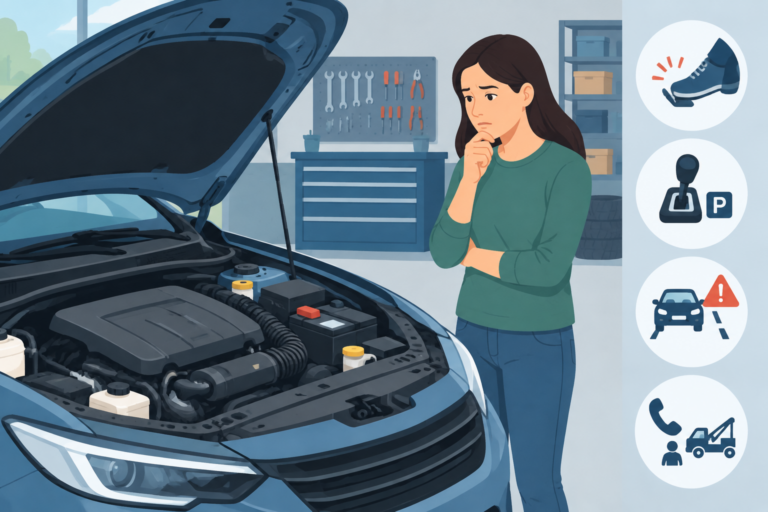
If the red oil pressure warning appears, stop in a safe place and turn off the engine. That light can mean the engine is not getting enough oil pressure. Driving on can cause severe engine damage, so arrange a tow.
Do not drive if oil is pouring out or the dipstick shows no oil. If you see smoke from oil reaching hot engine parts or smell burning oil, shut the engine off and let it cool. Do not touch hot parts or crawl under a car supported only by a jack.
Use the fluid color and drip location as clues
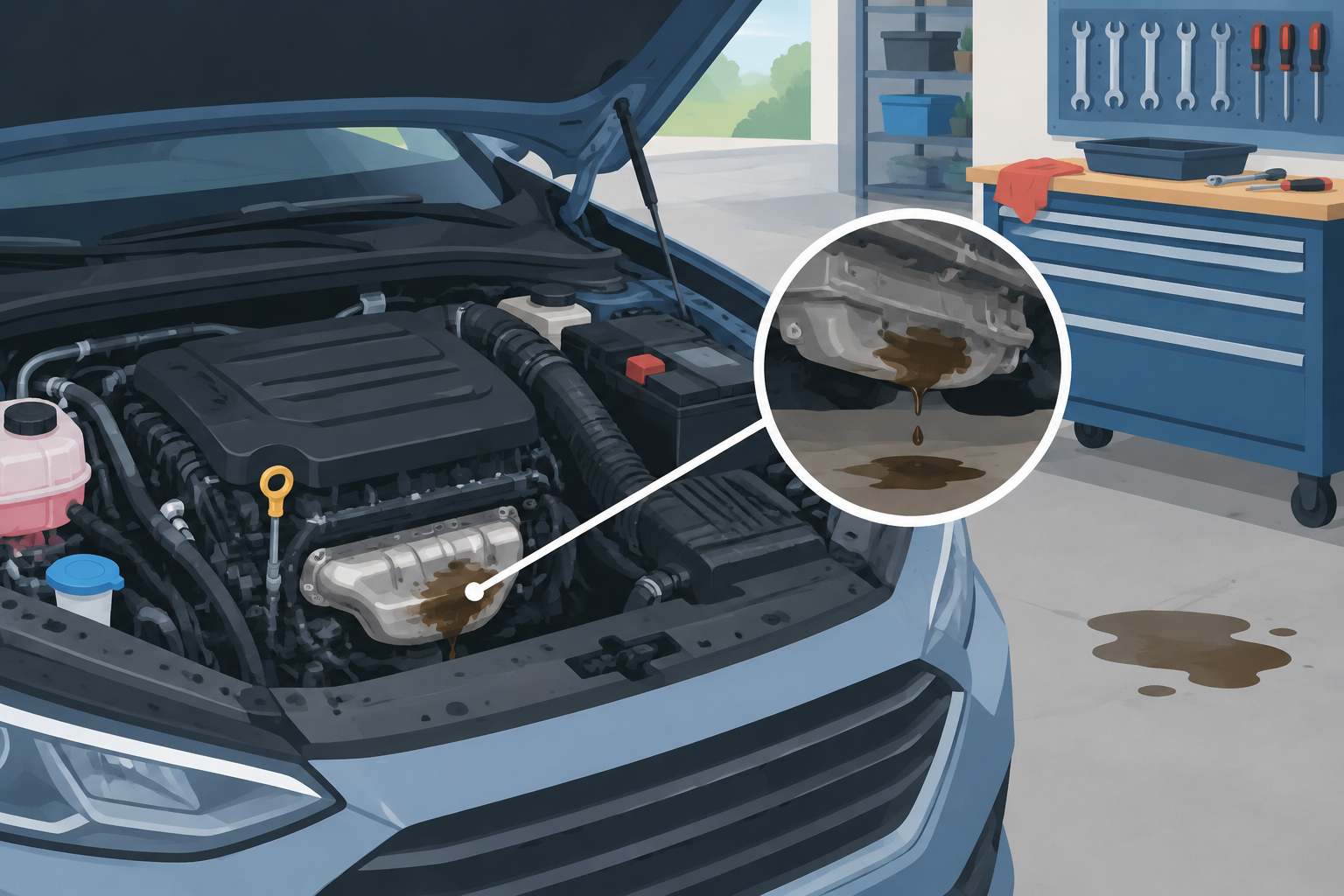
Park on level ground, turn the engine off and let it cool. Place clean cardboard beneath the engine area and check it after the car has been parked for a while. The mark shows where fluid reached the ground, but it may not sit directly below the leak.
Airflow can carry fluid along the underside while you drive. An underbody cover can also catch oil and let it drip from a different spot. Look for wet areas from above with a flashlight, and treat the puddle as a clue rather than a final diagnosis.
- Amber, brown or black: Engine oil ranges from light amber when fresh to dark brown or black after use. Color alone cannot tell you how old the oil is or where it leaked.
- Red or reddish-brown: This may be transmission fluid or power steering fluid, depending on the vehicle. Check your owner’s manual before identifying it.
- Bright or varied colors: Coolant can be green, orange, pink or another color. A sweet smell or rising temperature may point to a coolant problem.
- Clear water: Water under the car usually comes from the air conditioner. It is not oily to the touch, but do not taste or handle an unknown fluid.
If the puddle looks like engine oil, check the dipstick as described in your owner’s manual. If the level is low, the right oil type and amount depend on your vehicle. A warning light after an oil change deserves a prompt check, especially if the oil pressure light is on.
Common oil leak sources by location
Oil near the top or side of the engine
A valve cover gasket seals the top of the engine. When it wears or hardens, oil may show along the edge of the valve cover and run down the engine. A burning-oil smell can happen if oil reaches hot parts, but the smell alone does not confirm the source.
Repair estimates vary with engine layout and access. As a rough U.S. estimate, the gasket may cost $20 to $100 for parts, with labor around $150 to $500. A total bill of about $200 to $700 or more is possible.
Oil around the bottom of the engine
An oil pan gasket or seal can leak at the joint between the pan and engine. A worn or damaged pan can also leak. Oil reaching the ground near the engine’s center may fit this pattern, but oil from a higher leak can run down and collect there.
For a gasket repair, parts may run about $20 to $100, while labor can be roughly $250 to $800 or more. The job costs more if access is difficult or the pan is damaged. Treat these as estimates, since the vehicle and local labor rates matter.
Oil close to the drain plug or filter
The drain plug sits at the bottom of the oil pan. A worn washer, loose plug or damaged threads can let oil escape. A leak near the oil filter may come from a loose filter, a damaged seal or an old gasket left behind during a recent oil change.
A drain plug washer may cost about $2 to $10 for parts. Labor may be minimal during an oil service, though damaged threads can make the repair much more involved. An oil filter often costs around $5 to $25 for parts, with little added labor during an oil change. These are rough estimates, not a shop quote.
If the leak started right after service, contact the shop that changed the oil and explain when you first noticed it. Avoid tightening a hot or hard-to-reach filter or plug yourself. An incorrect repair can make the leak worse, and a plug with damaged threads may need more than tightening.
What to check before you call a shop
- Park on level ground, shut off the engine and wait for it to cool.
- Check the dipstick using the steps in your owner’s manual. Note whether the level is between the marks or below the minimum mark.
- Take a photo of the puddle and any wet area you can safely see from above. Note when the leak started and whether it followed an oil change.
- Tell the shop how much oil you have added, if any, and whether a warning light, burning smell or smoke appeared.
Do not slide under the vehicle to find the leak unless it is properly supported with equipment designed for the job. A mechanic can clean the engine area and trace the fresh leak if the source is hidden.
If the engine also makes new rattling or ticking sounds, mention that when booking the inspection. Low oil can contribute to engine noise. You can compare symptoms with common car rattling noises. If the temperature gauge rises, pull over safely and follow the steps for an overheating car.
How urgent is a small oil leak?
A small spot with a stable oil level may not need an emergency tow, but it still needs attention. Check the dipstick regularly until the repair, and book an inspection soon. A leak can grow, and oil reaching hot parts can create smoke or a burning smell.
Topping up the oil is not a repair. If the level drops between checks, the leak is getting worse or the warning light comes on, stop driving and get professional advice. If the oil pressure warning appears while driving, shut the engine off as soon as you can safely pull over.
When requesting an estimate, ask the shop to identify the leak source and to separate parts, labor and any diagnostic charge. Ask whether the quote includes an oil change or cleanup. A clear estimate lets you compare the repair with the actual leak instead of guessing from the puddle.
A small, stable leak can often wait for a scheduled inspection. Low oil, active dripping, smoke or an oil pressure warning calls for immediate action.
Related : Why Is My Car Accelerating on Its Own? Safety Steps
Frequently asked questions
Can engine oil leak when the car is parked?
Yes. Oil can drip onto the ground after the engine is off, especially if it has collected on a cover or engine surface while driving. A fresh spot after parking does not identify the exact leak source.
Does black oil mean the leak is serious?
No. Used engine oil often turns dark, so color by itself does not show how severe a leak is. Check the oil level and how much fluid is appearing.
Can I drive if the oil level is low?
If the dipstick is below the minimum mark, do not assume it is safe to drive. Follow the owner’s manual and contact a repair shop for guidance. If the oil pressure warning is on, turn off the engine and arrange a tow.
Why is my car leaking oil after an oil change?
A drain plug or filter seal may be loose or damaged, or oil may have spilled during service. Check the level and contact the shop promptly. Do not drive if oil is pouring out or a warning light appears.
This guide is general information. For safety-critical repairs, have your vehicle inspected by a certified mechanic.