Why Is My Car Accelerating on Its Own? Safety Steps
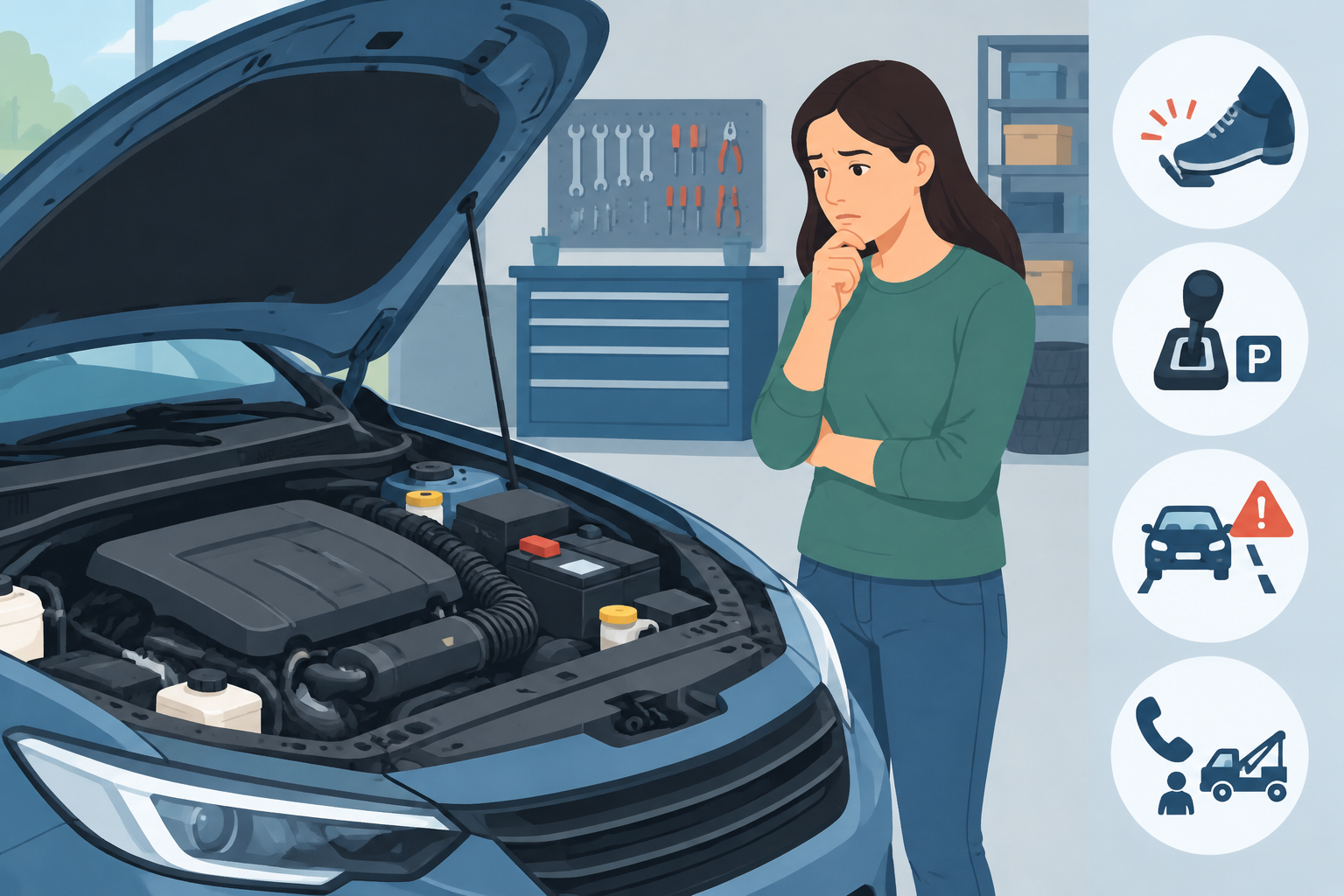
Quick answer: If your car accelerates on its own, press the brake firmly, shift to neutral, and steer to a safe place. Turn off the engine once the car has stopped. Do not keep driving if the problem repeats, the pedal sticks, or the engine surges. Call for a tow and have the car inspected.
What to do if your car speeds up unexpectedly
Keep your eyes on the road and press the brake firmly and steadily. If the car keeps pulling forward, shift into neutral. That disconnects the engine from the wheels, so the brakes can slow the car.
- Turn on your hazard lights if you can do it without taking your attention off the steering.
- Press the brake firmly and steer toward a safe shoulder or an open parking lot.
- Shift to neutral while the car is still moving. Do not shift into park or reverse.
- Once the car is stopped, set the parking brake and turn off the engine.
- Call for roadside help or a tow. Do not drive the car again until someone has checked the cause.
If you drive a manual, press the clutch and shift to neutral while you brake. Avoid pumping the brake pedal. A steady, strong press gives the braking system a consistent input.
If the brake pedal feels unusually hard or the car will not slow down, keep pressing firmly and steer away from traffic and people. Apply the parking brake gradually, because a sudden application can cause a skid. Call emergency services if you cannot control the car or a collision seems likely.
Do not reach down to move a mat or check a pedal while the car is moving. Turn off the ignition while driving only if there is no safer option, since you may lose power steering or brake assist. Controls vary by model, so follow the owner’s manual for emergency steps once the car is safely stopped.
Common reasons a car accelerates without you pressing the pedal
A floor mat or object is holding the pedal
A floor mat that has shifted, curled up, or been stacked on top of another mat can catch the accelerator. A loose bottle or other object near the pedal can also get in the way. Check this first once the car is safely parked.
With the engine off and the car secured, look at the driver’s footwell. Make sure the mat is the correct size, lies flat, and is fastened to its floor anchors. Remove any loose objects. Do not drive if the accelerator sticks, fails to return, or is blocked.
Throttle body or electronic throttle control fault
Most newer cars use electronic controls to manage the throttle. A problem with the throttle body, its motor, or its wiring can cause an odd idle, hesitation, or surging. Other engine problems can produce the same symptoms, so a warning light alone won’t show which part has failed.
A mechanic can scan the car for fault codes and test the throttle system. If the check-engine light is flashing, stop driving as soon as it is safe and arrange help. See what a flashing check-engine light means.
Accelerator pedal sensor or wiring problem
Electronic accelerator pedals use sensors to report how far the pedal is pressed. A faulty sensor, connector, or wire can send a wrong signal to the engine computer. The car may surge, idle high, lose power, or show a warning message.
These parts need proper testing. Replacing a sensor based only on the symptom can waste money, because a wiring issue or throttle body fault can look similar.
Cruise control or an engine air leak
A cruise-control fault can keep the car applying power after you expect it to stop. A vacuum leak can cause a high or uneven idle, especially when the car is stopped. These problems can feel like unwanted acceleration, but the causes and repairs differ.
Note when the symptom happens: at idle, during acceleration, on a hill, or with cruise control on. That detail helps the shop narrow down the problem.

When to stop driving and call a tow
Have the vehicle towed if it accelerated without a clear pedal input, the accelerator sticks, the engine keeps revving after you shift to neutral, or the problem returns after a restart. A car that has surged once can do it again in traffic, so testing it on public roads is unsafe.
Stop driving and get help if you see smoke, notice a burning smell, get a throttle-related warning message, or feel an abnormal brake pedal. If the car is in a dangerous spot, move it only as far as needed to reach a safer place, then shut it down.
A single brief rise in engine speed may have a different cause than a car that keeps gaining speed. Still, report any unexpected movement to the repair shop. If you think the car might have an open safety recall, check your car for open recalls and owner complaints.
What a mechanic will check
A shop will usually start by confirming the complaint, then check the accelerator pedal, floor mat, and throttle response. The technician may scan the engine computer for stored codes, inspect wiring and connectors, and test the throttle body and pedal sensors.
Bring these details if you can:
- When the surge happened and whether the car was moving or stopped.
- Whether cruise control was on, and whether any brake lights or warning lights came on.
- How fast the engine revved and whether shifting to neutral changed the behavior.
- Any recent repair, battery replacement, or change to the floor mats.
Ask the shop which test identified the faulty part before you approve a replacement. Request an estimate that lists parts and labor separately, along with any diagnostic fee. Throttle and sensor repairs vary widely by vehicle, so the quote should match your car’s year, make, and model.
If the check-engine light came on after recent service or refueling, mention the timing. It can help the technician trace a loose connection or a related fault. This guide to a check-engine light after getting gas explains which details to note.
How to reduce the chance of another incident
Use the floor mat made for your vehicle and fasten it to the factory anchors. Keep the pedal area clear, and never stack mats. After cleaning or replacing a mat, confirm the accelerator and brake pedals move freely before you start the car.
Watch for changes in idle speed, pedal feel, and warning lights. If the engine starts surging again, stop somewhere safe and arrange an inspection. Do not try to reproduce the problem by revving the engine or driving at speed.
After the repair, ask the shop what caused the symptom and whether it confirmed normal throttle operation during testing. Keep the repair paperwork with your service records. If the symptom returns, stop driving and contact the shop.
If the car accelerates without a clear pedal input or the symptom repeats, park it safely and call for a tow.
Frequently asked questions
Can I drive my car if it accelerated on its own once?
Wait until the car has been inspected. A mat may have caught the pedal, but an electronic or mechanical fault can return without warning.
Should I turn off the engine while the car is moving?
Brake, shift to neutral, and steer to a safe place first. Shut off the engine after stopping. Turning it off while moving can reduce steering or brake assistance, depending on the vehicle.
Will shifting to neutral damage an automatic transmission?
Neutral is a safer way to handle an emergency than letting the car keep accelerating. Do not shift into park or reverse while moving. Once stopped, leave the car secured and arrange an inspection.
Can a floor mat really make a car accelerate?
Yes. A mat or loose object can physically hold the accelerator down. Check the footwell only after the vehicle is parked, the engine is off, and the car is secured.
What should I tell the repair shop?
Describe when it happened, how the car responded, whether cruise control was on, and what happened when you braked or shifted to neutral. Mention any warning lights and recent service.
This guide is general information. For safety-critical repairs, have your vehicle inspected by a certified mechanic.