
Car Squeaking Noise When Braking: What It Means
Quick answer: A high-pitched squeal when braking usually comes from the metal wear indicator touching the rotor, though moisture, dust, or pad vibration can also cause it. If braking feels normal and there is no grinding, you can usually drive carefully to a shop. Stop safely and arrange an inspection if the pedal changes, the car shakes, or grinding starts.
What a high-pitched brake squeal can mean
A squeal while you press the brake pedal often comes from vibration between the brake pad and rotor. The sound can be sharp and high-pitched, and it may change with how hard you brake. A squeal alone does not tell you how much pad material is left.
The wear indicator tab
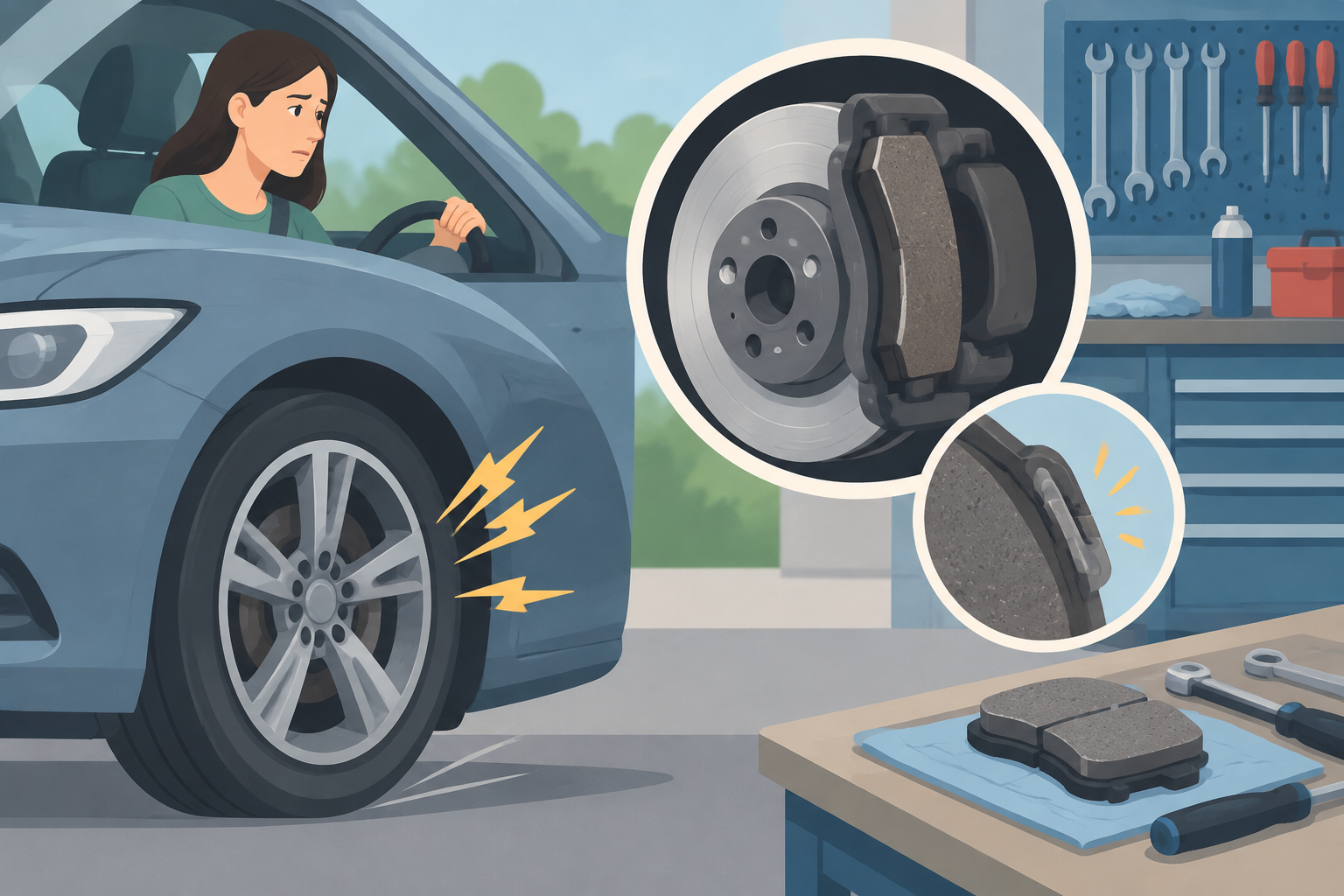
Many brake pads have a small metal tab that touches the rotor as the pad wears down. That contact makes a high-pitched warning sound, usually during braking. It means the pads should be inspected soon, because continued wear can lead to metal-on-metal contact.
The tab only signals wear. It cannot tell you how many miles the pads have left. Wear can differ from one wheel to another, and driving conditions change how fast pads wear. A mechanic can measure the pads and check the rotors.
Other common causes
Moisture can leave a thin layer of surface rust on the rotor after rain, a car wash, or a night outside. A light squeak that fades after a few normal stops often comes from that rust. Dust or loose hardware that lets a pad vibrate can also cause squealing.
A squeal that keeps returning, grows louder, or happens on most stops deserves an inspection. Some pad materials are noisier than others, and a shop can check the pads, clips, and rotor surfaces.
Squealing versus grinding
A squeal is usually a high, thin sound. Grinding is rougher and lower, like metal scraping against metal. Grinding after a period of squealing often means the pad material has worn away enough for its backing plate to touch the rotor.
Grinding can damage the rotor and reduce braking performance. Avoid driving the car if you hear grinding while braking. Pull over somewhere safe and arrange a tow or roadside assistance. For more causes and next steps, see what grinding noise when braking can mean.
A sound that continues after you release the brake may point to a different problem, such as a brake part dragging. Have a mechanic check it promptly, especially if you notice heat or a burning smell near a wheel. Do not touch the wheel or brake parts to check their temperature.

When to stop driving and get help
Stop in a safe place and arrange a tow if the brake pedal sinks unusually low, feels soft, or suddenly takes much more effort to press. The same applies if the car pulls hard to one side during braking, since that makes stopping harder to predict.
- Grinding: Stop driving and have the brakes inspected. Further driving can worsen damage.
- Strong shaking or vibration during braking: Slow down gently and find a safe place to stop. Arrange an inspection before continuing if the shaking is pronounced or affects steering. For vibration at highway speed even without braking, see common causes of car vibration at highway speed.
- Brake warning light with a pedal change: Stop safely and call for help. A red brake warning light can relate to the braking system, so do not continue if braking feels different.
- Smoke or a strong burning smell near a wheel: Stop and keep clear of the hot parts. Call for roadside help and do not drive to a repair shop.
An ABS warning light on its own may indicate an anti-lock braking fault while the regular brakes still work, but the system still needs prompt diagnosis. Follow the owner’s manual and get the vehicle checked. If the red brake warning light stays on after you confirm the parking brake is released, contact a shop for guidance.
What to do before calling a shop
Note when the noise happens. Record whether it occurs only on the first few stops after rain or on every stop, and whether it happens when you turn. Also note whether the pedal feels normal and whether the car pulls or shakes.
Tell the shop which wheel seems to make the sound, if you can identify it, and whether the noise is a squeal or a grind. Ask for the pad thickness at each wheel and a written estimate that separates parts from labor. The inspection results will show whether the repair can wait or needs attention now.
Do not reach behind a wheel or put your hands near brake parts to look for the wear tab. The tab is hard to see, and the brakes may be hot. If the sound is a rattle rather than a brake scrape, compare it with common causes of car rattling noises.
Brake repair cost estimates
Brake prices depend on the vehicle, the parts, and local labor rates. As rough US estimates, brake-pad parts for one axle may cost about $50 to $150, with labor around $100 to $250. Shops often combine those charges into one price.
Replacing pads and rotors on one axle may run roughly $300 to $800 in total, with parts around $150 to $400 and labor around $150 to $400. Some vehicles cost more. Ask whether the quote covers both sides of the axle and any hardware that needs replacing.
If only a small hardware issue is causing the noise, the repair may cost less than a pad-and-rotor job. Worn-through pads or damaged rotors raise the total. Get the inspection findings in writing before approving extra work.
Frequently asked questions
Can I drive with squeaky brakes?
If the sound is a light squeal, the pedal feels normal, and the car stops as usual, you can usually drive carefully to a repair shop. Keep trips short and get the brakes inspected soon. Do not drive if you hear grinding or notice a major change in braking.
Why do my brakes squeak only in the morning?
Overnight moisture can create a thin rust film on the rotors, which often squeaks during the first stops. If the sound fades and braking feels normal, moisture is a likely cause. Noise that persists or gets worse still needs an inspection.
Does a squeal always mean my brake pads are worn out?
No. A wear indicator squeals as pads wear down, but moisture, dust, pad material, or vibration can also cause noise. Measuring the pads is the only reliable way to know how much material remains.
Should I replace the rotors when I replace the pads?
That depends on rotor thickness and condition. A mechanic should measure the rotors and check for damage before recommending replacement. Ask to see the measurements and the reason for the repair.
This guide is general information. For safety-critical repairs, have your vehicle inspected by a certified mechanic.