
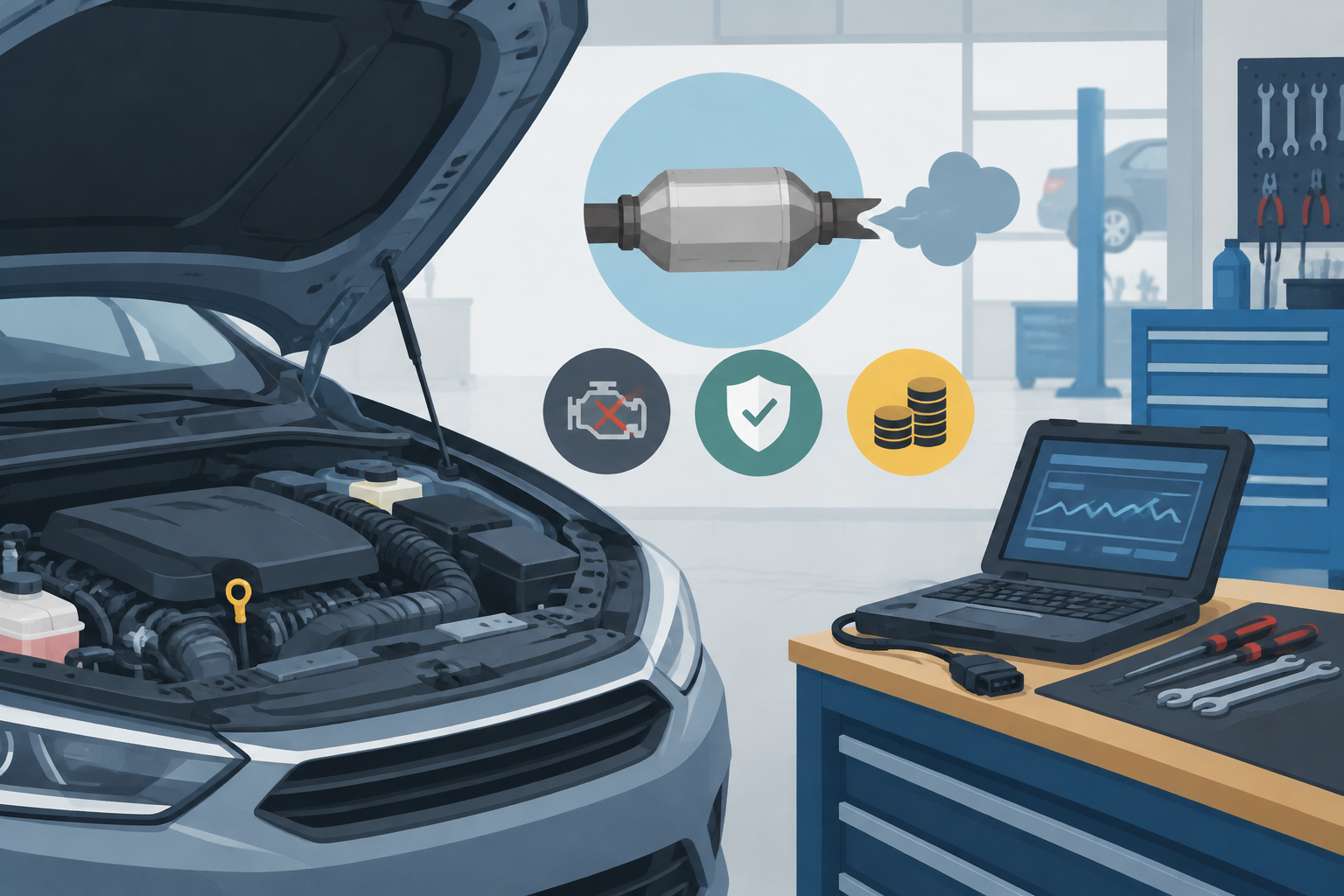
P0420 Code Meaning: Causes, Safety, and Repair Costs
Quick answer: P0420 means the engine computer sees low catalytic converter efficiency on bank 1. You can usually drive a short distance if the check engine light is steady and the car runs normally, but schedule a diagnosis soon. Stop driving if the light flashes, the engine overheats, or power drops sharply.
What the P0420 code means
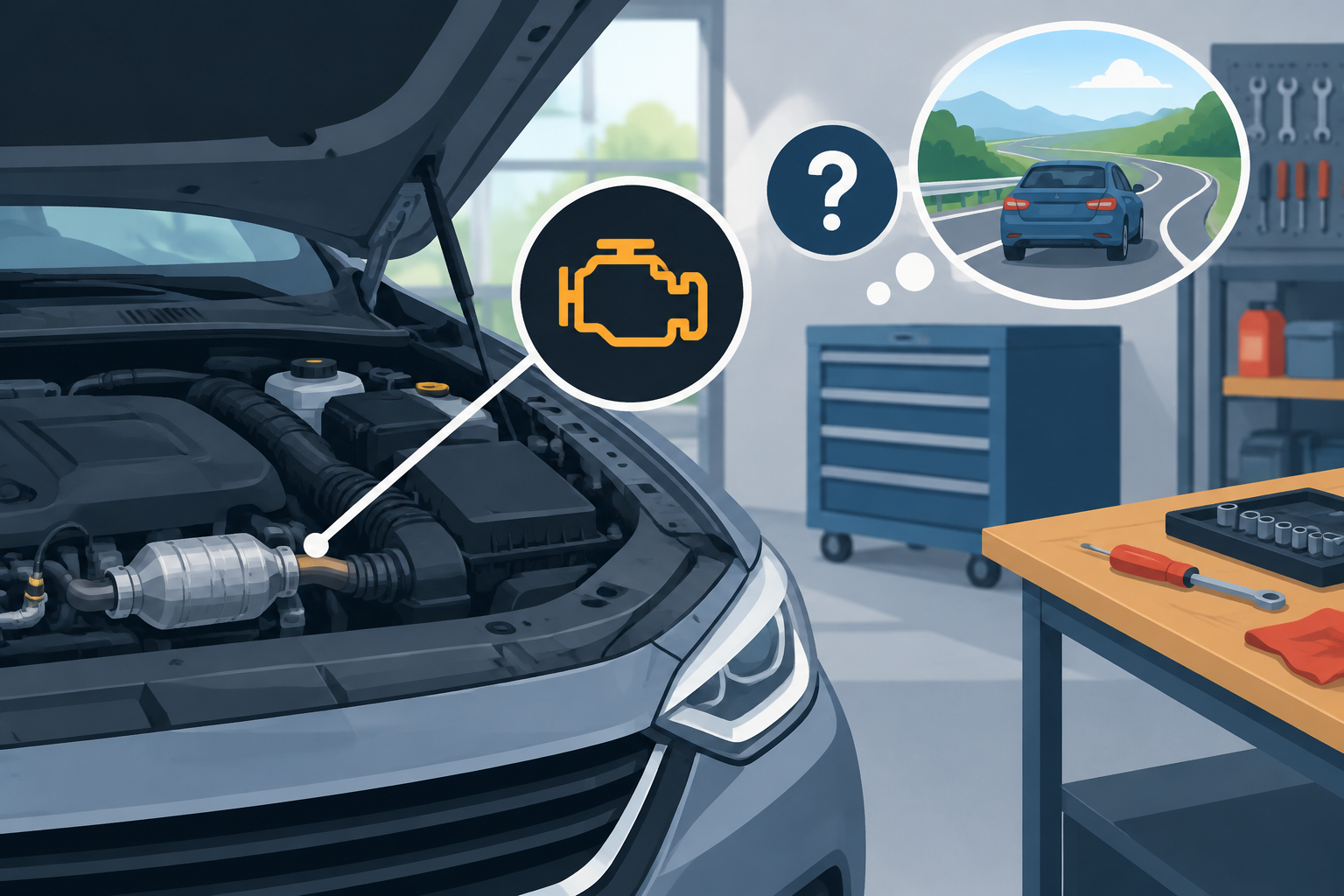
P0420 stands for “Catalyst System Efficiency Below Threshold,” usually on bank 1. The engine computer compares readings from the oxygen sensors before and after the catalytic converter. When those readings suggest the converter is not cleaning exhaust well enough, the computer stores P0420 and turns on the check engine light.
Bank 1 is the side of the engine that holds cylinder 1. Many four-cylinder engines have only one bank. A scan tool may show other codes that help explain the P0420. The code describes a system problem, and the converter may or may not be the cause.
The catalytic converter reduces certain harmful exhaust pollutants. A failing converter raises emissions and can eventually restrict exhaust flow. A faulty oxygen sensor or an exhaust leak can also throw off the computer’s readings.
Can you keep driving with P0420?
If the check engine light is steady and the car starts and accelerates normally, a short drive to a repair shop is usually fine. Book a diagnosis soon. Driving for weeks leaves the underlying problem untreated, and a converter replacement costs more than a sensor or leak repair.
Pull over somewhere safe and shut off the engine if the check engine light flashes, the car loses a lot of power, or the engine overheats. A flashing light usually means a misfire, which can damage the catalytic converter. If you smell exhaust inside the cabin, stop and get help, since exhaust fumes are dangerous.
A badly restricted converter can cause sluggish acceleration or make the engine struggle under load. If the exhaust area feels unusually hot or you see smoke, have the car checked right away. If you suspect an overheating exhaust part, avoid parking over dry grass or leaves.
If the light came on just after maintenance, tell the shop what work was done and when. A loose connector or an unrelated issue may have triggered the warning. See our guide to a check engine light after an oil change for related checks.
Common causes of a P0420 code
- Worn catalytic converter: Age and heat wear down the converter’s ability to clean exhaust. Repeated misfires or an engine running too rich can damage it too.
- Faulty downstream oxygen sensor: The sensor after the converter measures exhaust oxygen. A worn sensor or a bad connection can send inaccurate readings.
- Exhaust leak: A leak near the converter or an oxygen sensor can skew the readings. A ticking sound, especially during a cold start, is a common clue. For other exhaust-area sounds, see common causes of car rattling.
- Engine running problem: Misfires or an incorrect air-fuel mixture can send unburned fuel into the exhaust, overheating or damaging the converter.
- Wiring or connector trouble: Corrosion or a loose plug can interrupt the sensor signal.
The right repair depends on the cause. Replacing the converter before checking for leaks and sensor faults can waste money. If the engine misfires, fix that first, or the new converter may be damaged too.
How a mechanic separates a sensor problem from a converter problem
A mechanic starts by reading all stored and pending codes, then reviews the vehicle’s service information and symptoms. Other codes can point to a misfire, a fuel mixture issue, or a sensor circuit fault. Clearing the code without diagnosis leaves the cause in place, and the warning usually returns.
The inspection often includes a search for exhaust leaks, a check of oxygen sensor wiring and connectors, and a review of live sensor readings with a scan tool. The mechanic may also check for misfires and fuel trim problems. A sensor that responds incorrectly points toward the sensor or its circuit. Readings that show poor converter performance support a converter diagnosis, but one reading rarely settles the question. The rest of the system needs checking too.
Ask the shop which tests support its recommendation. For example: “Did you check for exhaust leaks and sensor or engine codes before recommending a converter?” You can also ask for an estimate that lists parts and labor separately.
If the light flashes while you drive, follow the steps in our guide to what to do when a check engine light flashes. A flashing light needs faster attention than a steady light with no symptoms.
P0420 repair costs: typical estimates
Prices depend on the vehicle, converter location, parts availability, and labor rates. These are rough US estimates only. Ask for a written estimate that names the diagnosed cause and lists parts and labor separately.
- Diagnostic inspection: About $100 to $200. Some shops apply this charge toward the repair.
- Oxygen sensor: Parts may run about $50 to $250, with labor around $100 to $300. Access and sensor type change the total.
- Exhaust leak repair: A small repair may cost roughly $100 to $600. Larger or hard-to-reach damage costs more.
- Catalytic converter: Parts range from a few hundred dollars to more than $2,000. Labor adds about $150 to $800 or more. A full repair often lands around $500 to $3,000 or higher, especially on vehicles that need an expensive converter.
Converter costs vary widely because vehicles use different parts and some are hard to reach. Emissions rules also differ by location. Confirm the part in the estimate is approved for your vehicle and legal where the car is registered.
Before you approve a converter, ask whether the shop found a leak, verified the oxygen sensor signals, and checked for engine problems that could damage the new part. If the car runs roughly or you see a separate code, tell the mechanic when it started and whether it changes with engine temperature or speed.
Frequently asked questions
Does P0420 always mean I need a new catalytic converter?
No. A worn converter is one possible cause, but an oxygen sensor, an exhaust leak, or an engine issue can also set the code. Testing identifies the cause before parts get replaced.
Can a bad oxygen sensor cause P0420?
Yes. A faulty downstream sensor or damaged wiring can send inaccurate information. A mechanic should test the sensor circuit and check for exhaust leaks before deciding between a sensor and a converter.
Will P0420 make my car fail an emissions test?
It can. A lit check engine light or a stored emissions code may cause a failed inspection, depending on the testing program. Repair the cause and confirm the code has cleared before counting on a pass.
Can I clear the P0420 code and keep driving?
Clearing the code only hides the warning for a while. The computer runs its checks again, and the code often returns. Get the cause diagnosed, especially if the car has weak power, a flashing light, or other warning codes.
This guide is general information. For safety-critical repairs, have your vehicle inspected by a certified mechanic.
One Comment
Comments are closed.