Check Engine Light Came On After Getting Gas: What to Do
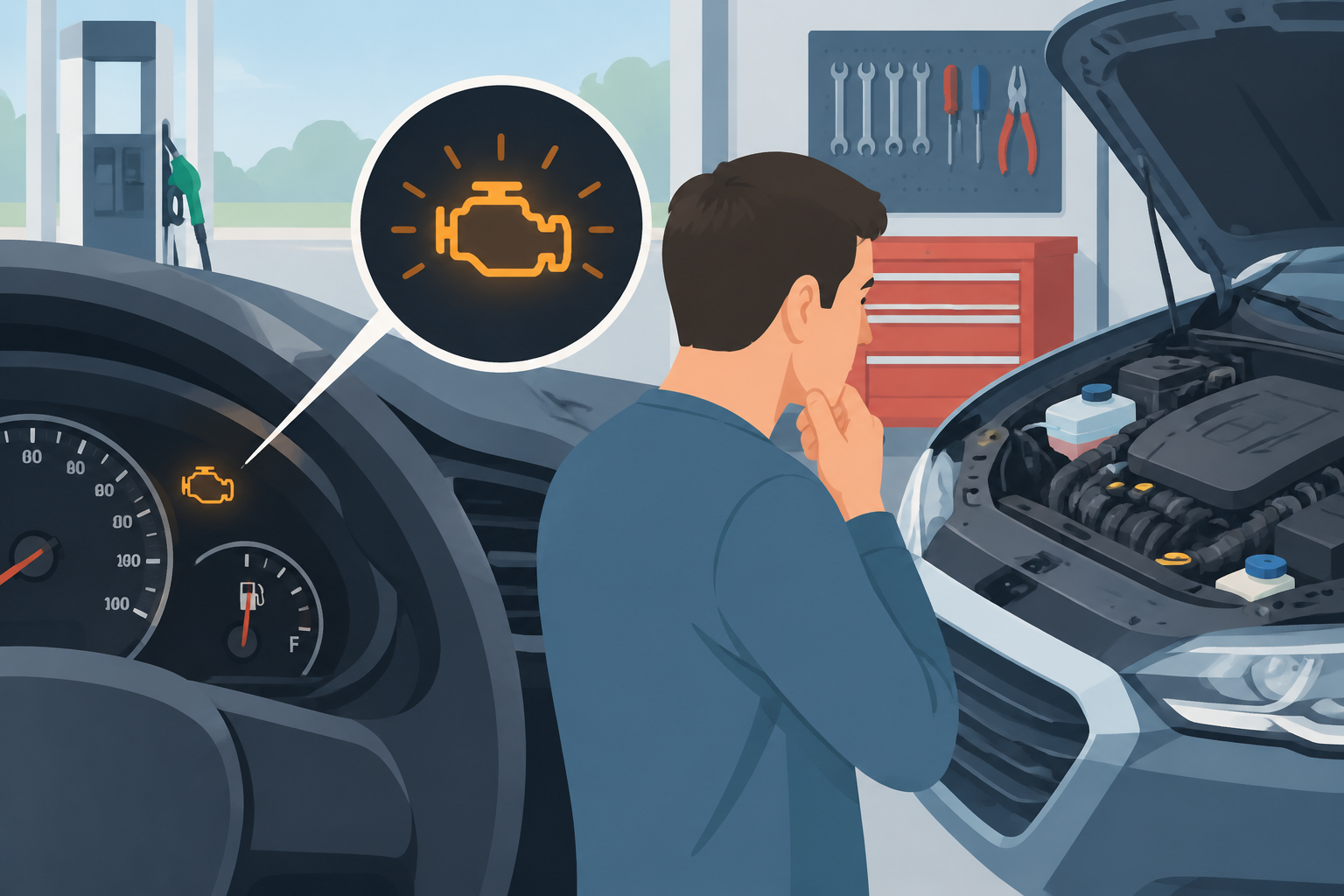
Quick answer: If your check engine light came on after getting gas and stays steady, a loose or worn gas cap is a common cause. Park safely, tighten the cap until it clicks, then drive for several trips so the system can recheck itself. You can usually keep driving if the engine runs normally. Pull over if the light flashes or the engine runs badly.
Why the light can come on after getting gas
Your car’s evaporative emissions system, often called the EVAP system, keeps gasoline vapor from escaping into the air. The fuel cap seals the filler opening so the system can hold pressure and run leak checks.
A loose cap, a cracked cap, or one with a worn rubber seal may let vapor escape. The computer can detect the leak and turn on the check engine light. The timing makes the cap a strong suspect, but the light alone does not prove the cap is the cause.
Some cars show a warning such as “check fuel cap.” Others show only the check engine light. An EVAP fault code may point to a leak, but the code alone cannot confirm which part has failed.
Common EVAP codes
A scan tool may show a code such as P0455 for a large leak or P0456 for a small one. Code definitions vary by vehicle, and a code does not automatically mean you need a new cap.
Other EVAP faults include a damaged filler neck, a split vapor hose, or a faulty purge valve. The cap is an easy first check. A code scan and proper testing narrow down the rest.
How to check and tighten the gas cap
Check the cap when the car is parked safely and the engine is off. You do not need to open the fuel system or touch any fuel lines.
- Remove the cap and inspect the rubber seal for cracks, flattening, or dirt on the sealing surface.
- Look into the filler opening for dirt or damage. Never force anything into it.
- Put the cap back on straight and tighten it until it clicks. Some caps click more than once, so follow the owner’s manual if it says otherwise.
- Close the fuel door and drive normally while watching the warning light and how the car runs.
If the cap is visibly damaged or will not tighten securely, replace it with one listed for your exact vehicle. A universal cap may fit poorly or fail to seal. The owner’s manual or a parts counter can confirm the right fit using your vehicle details.
A replacement cap commonly costs an estimated $10 to $40 for the part. A shop may add labor or a minimum service fee, and prices vary by vehicle and cap design.

Can you keep driving with the light on?
A steady check engine light with normal engine performance usually allows you to drive to a repair shop or make necessary trips while you arrange a scan. A loose cap by itself rarely changes how the engine runs, though the light may stay on until the system confirms the repair.
Stop as soon as it is safe if the light flashes, the engine shakes or loses power, or you smell strong raw gasoline. A flashing light can signal a problem that may damage the catalytic converter. If you smell fuel, stay away from flames and smoking, and get help locating the leak.
For more on the difference between a steady and flashing warning, read what a flashing check engine light means. If the car is overheating or behaving unpredictably, do not assume the gas cap explains it. Use the steps in this overheating checklist if the temperature warning rises.
How long does the light take to clear?
After you tighten or replace the cap, the computer needs to run its EVAP checks before it can confirm the leak is gone. That often takes several normal trips. The timing depends on the vehicle, fuel level, and driving conditions, so no single mileage figure works for every car.
The light may switch off on its own once the system passes its checks. It can stay on for a while even after the cap is fixed. If it remains on after several days of ordinary driving, or returns after going out, have the code read.
A repair shop or parts store can read the stored code. Ask whether the code is current, pending, or stored. Clearing the code before the cause is found erases useful diagnostic information, and the warning will likely return if the leak remains.
Disconnecting the battery is not a dependable fix. It can erase stored information and reset vehicle settings. Let the system finish its checks or have a technician diagnose the fault.
When a scan or repair is needed
Get a code scan if the cap is secure and the light stays on, if it returns after going out, or if the car shows another symptom. A mechanic can use the code as a starting point, then test the EVAP system for leaks, including the hoses and the filler area.
Tell the shop when the light appeared, whether you had just refueled, whether the cap clicked, and whether you replaced it. Share any code you already have. That gives the technician a useful starting point and reduces guesswork on parts.
A basic diagnostic check commonly costs an estimated $100 to $200, though rates and what the test includes vary by shop and location. A cap may be inexpensive, while an EVAP leak elsewhere can need more testing and parts. Ask for the diagnosis and a repair estimate before approving any work.
If the light appeared after another recent service, mention it too. Say a warning starts after an oil change. It may have a separate cause, covered in common check engine light causes after an oil change.
Start with the cap: tighten it, inspect the seal, and give the car a few trips for its EVAP checks. A steady light with normal driving usually allows a trip to a shop for diagnosis, but a flashing light, rough running, or a strong fuel smell needs prompt attention.
Frequently asked questions
Will the light go off as soon as I tighten the cap?
Usually not. The computer needs to run its EVAP checks, which can take several trips. If the light stays on or returns, get the code read.
Can a bad gas cap make the car run rough?
A cap leak typically triggers an emissions warning without changing how the engine runs. Rough running points to a different or deeper problem, so have the car checked if it appears.
Should I replace the cap even if it looks fine?
Start by tightening it correctly and checking the seal. If the light stays on, use the code and a proper leak test to decide whether the cap or another EVAP part needs repair.
Can I clear the code with a scan tool?
A scan tool can erase the code, but that does not fix a leak. The warning may return once the system runs its checks, so record the code before clearing it and diagnose the cause first.
This guide is general information. For safety-critical repairs, have your vehicle inspected by a certified mechanic.