
Grinding Noise When Braking: Causes and What to Do
Quick answer : A grinding noise when braking usually means the brake pads are worn down and metal is rubbing on the rotor. Less often, a stone or other debris is trapped in the brake. Light grinding that fades after a few stops is likely rust. Grinding that persists means the brakes need a check right away.
A harsh, scraping, metal-on-metal sound when you press the brake pedal is a noise you should take seriously. Brakes are designed to wear slowly and warn you first. Grinding usually means that warning came and went.
This guide covers the likely causes, how to tell grinding from a normal squeal, the risks of driving on, and what a typical repair involves.
What a grinding brake noise means
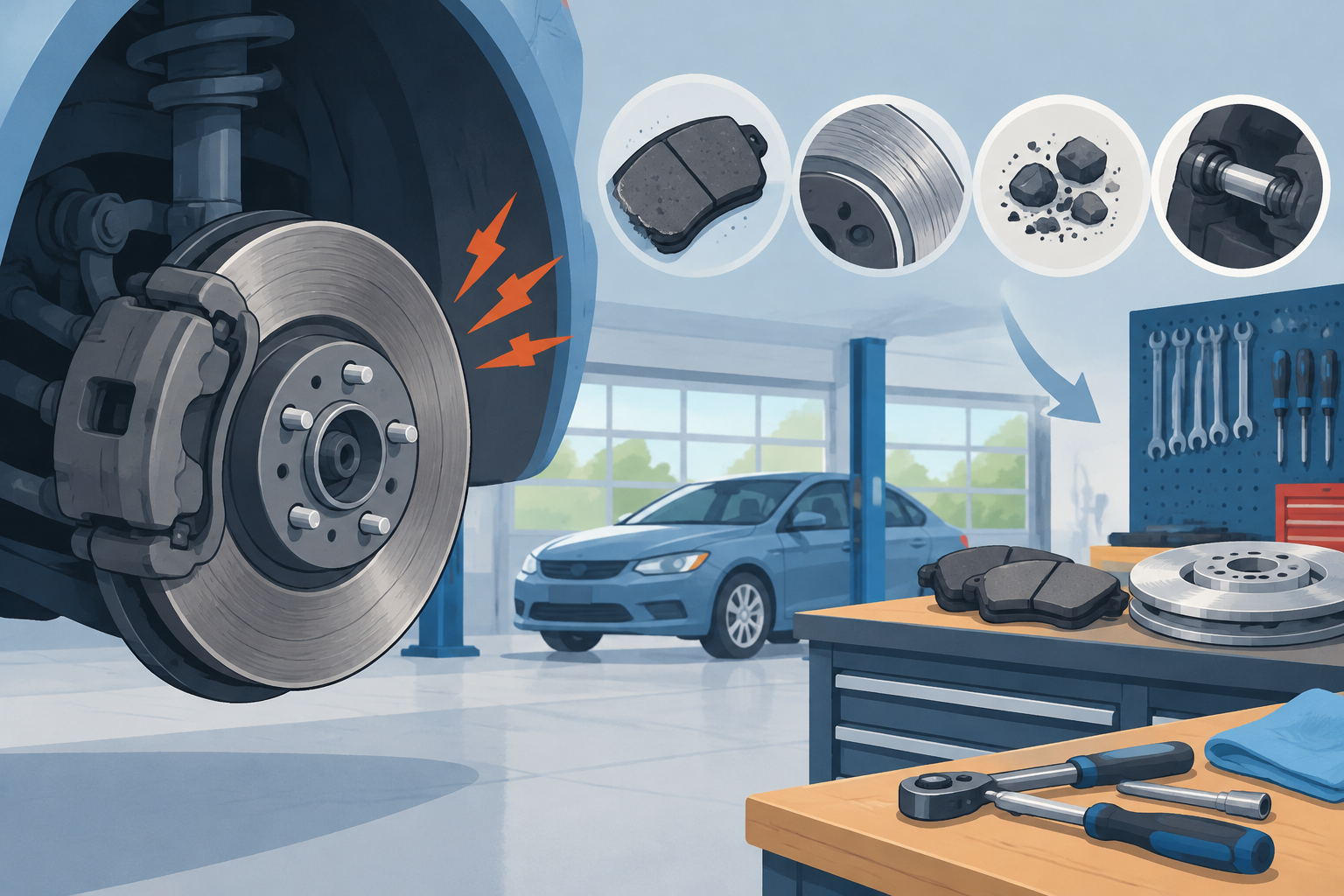
Your brakes squeeze brake pads against a spinning metal disc called the rotor. The pads have friction material bonded to a steel backing plate. That friction material is meant to wear away over time.
When the friction material is gone, the steel backing plate presses straight onto the rotor. Steel against iron makes a deep, rough growl. The sound often gets louder as you press harder, and you may feel vibration through the pedal or steering wheel.
Common causes of grinding when braking
1. Worn-out brake pads
Most cases start here. Heavy city traffic, towing, and frequent hard stops all speed up wear. Once the friction material is used up, the backing plate starts cutting into the rotor.
2. Damaged or worn rotors
Rotors can develop deep grooves, rough edges, or a raised lip at the outer edge. This often follows long use or driving on pads that were already down to metal. A badly scored rotor will grind even with new pads, so shops often replace both at once.
3. Debris caught in the brake
A small stone, a bit of grit, or a bent dust shield can scrape the rotor. The scraping may happen with or without the brakes applied, and it can sound like grinding even when the pads are fine.
4. Surface rust on the rotors
A car that sat overnight, or got rained on or washed, often grows a thin film of rust on the rotors. The first few stops may sound scratchy or grindy. The noise should clear after several normal stops. If it doesn’t, treat it as a real problem.
5. A stuck caliper or slide pins
The caliper is the clamp that pushes the pads onto the rotor. When it sticks, one pad can stay in contact and wear much faster than the other. Signs include the car pulling to one side, a burning smell, or one wheel noticeably hotter than the rest after a drive.
6. A worn wheel bearing (a look-alike)
A failing bearing makes a grinding or humming sound that tends to change with speed or steering. It doesn’t depend on the brake pedal. If you hear it with your foot off the brake, tell your mechanic.
Grinding vs. squealing: how to tell them apart
Many pads have a small metal tab called a wear indicator. When the pad thins, the tab touches the rotor and produces a high-pitched squeal. It’s built in as an early warning, giving you time to book a repair.
Grinding is lower and rougher. It usually means the warning was missed or the pads wore faster than expected.
| Sound | What it usually means | How urgent |
|---|---|---|
| High-pitched squeal while braking | Wear indicator touching the rotor, or glazed or dusty pads | Get it checked soon |
| Squeal that stops when you press the pedal | Often the wear indicator or a pad vibration | Get it checked soon |
| Deep, rough grinding when braking | Pads worn to the metal backing, damaged rotors | Stop driving if possible, inspect now |
| Light scratchy sound after rain or sitting | Surface rust on rotors | Should clear within a few stops |
| Scraping that continues without braking | Debris, bent dust shield, stuck caliper, or wheel bearing | Inspect soon, sooner if it gets worse |
Some pad compounds squeak when cold or damp, so a squeal doesn’t always mean the pads are worn. An intermittent squeal is usually less serious than grinding, though only an inspection can confirm it.
Why grinding brakes shouldn’t be driven on
Brakes are the most important safety system on the car. Grinding shows they aren’t performing as designed.
- Longer stopping distances. Metal on metal grips less well and less evenly than proper pads.
- Higher repair costs. Each day of driving cuts deeper into the rotors, so a simple pad job can grow into a larger repair.
- Overheating. Damaged brakes can run hot, which reduces performance and can harm nearby parts.
- Possible failure at one wheel. If the backing plate wears through or a caliper fails, braking at that wheel can drop sharply.
If the grinding is loud and constant, call for a tow. A soft or sinking pedal, a hard pull to one side, or a burning smell all call for the same response. If the noise is mild and nothing else is wrong, drive a short, slow distance straight to a mechanic, leave extra room, and stay off highways.
What to check yourself (without taking anything apart)
A few minutes of observation gives your mechanic useful information. It doesn’t replace an inspection.
- Note when it happens. Does it occur only while braking, or at other times too?
- Note the location. Which wheels are making the sound? Front brakes usually wear fastest on most cars.
- Look through the spokes. With a flashlight, you can often see the pad against the rotor. If the pad looks very thin, or the rotor has a deep groove or a blue tint, tell the shop.
- Check the dash. A brake warning light or a low fluid reading makes the problem more urgent.
- Feel the pedal. A pulsing or spongy pedal helps the mechanic narrow things down.
Only start removing brake parts if you have the right tools, a safe way to support the vehicle, and solid experience. Brake mistakes can cause crashes. Never work under a car held up only by a jack.
What the repair usually involves
A mechanic will lift the car, remove the wheels, and measure the pads and rotors. They also inspect the calipers and slide pins, then check the hoses and fluid.
Typical repair steps
- New brake pads. Replaced in pairs on the same axle, both fronts or both rears.
- New or resurfaced rotors. Grooved or thin rotors need replacing. Resurfacing only works if enough thickness remains.
- Caliper service or replacement. A stuck caliper gets cleaned and lubricated, or replaced.
- Hardware and lubrication. New clips and fresh grease on contact points help prevent noise.
- Brake fluid check. Old or low fluid gets flushed or topped up.
Rough cost estimates
Prices vary by vehicle, region, and shop. These figures are rough, per axle, with parts and labor included.
- Pads only: about $100 to $300.
- Pads and rotors: about $300 to $800 or more.
- Caliper replacement: about $150 to $350 or more per caliper.
Trucks, SUVs, European brands, and performance cars usually cost more. Ask for a written estimate and request that the shop show you the worn parts.
How to avoid grinding brakes in the future
- Have the brakes inspected at least once a year and whenever you rotate the tires.
- Act on squealing early, while a pad replacement may be all you need.
- Avoid riding the brake on long downhills. Use a lower gear to slow the car.
- Replace brake fluid on the schedule in your owner’s manual.
- Keep up with recalls. You can look up your vehicle by VIN on the NHTSA recalls page.
Frequently asked questions
Is it safe to drive with a grinding noise when braking?
Usually not. Constant grinding typically means the pads are gone and the brakes are damaged. If you must move the car, go slowly and only to a repair shop. A soft pedal or a pull to one side calls for a tow.
Why do my brakes grind only the first time I use them in the morning?
Rotors can pick up a thin layer of rust overnight or after rain. The first few stops wear it away, and the noise fades. If grinding continues after several stops, have the brakes inspected.
Can new brake pads grind?
Yes, briefly, if debris is stuck in the brake or the rotors were already damaged. Pads installed without proper hardware, or over worn rotors, can also make noise. If the sound lasts beyond the first few days, return to the shop that did the work.
How long can I drive once the brakes start grinding?
There is no safe mileage figure. It depends on how worn the parts are and how hard you brake. Treat grinding as a reason to get the car inspected right away.
Do I always need new rotors if the pads are grinding?
Not always, but often. A smooth rotor still above its minimum thickness can be resurfaced or reused. Deep grooves, heat damage, or thin rotors call for replacement.
This guide is general information. For safety-critical repairs, have your vehicle inspected by a certified mechanic.