
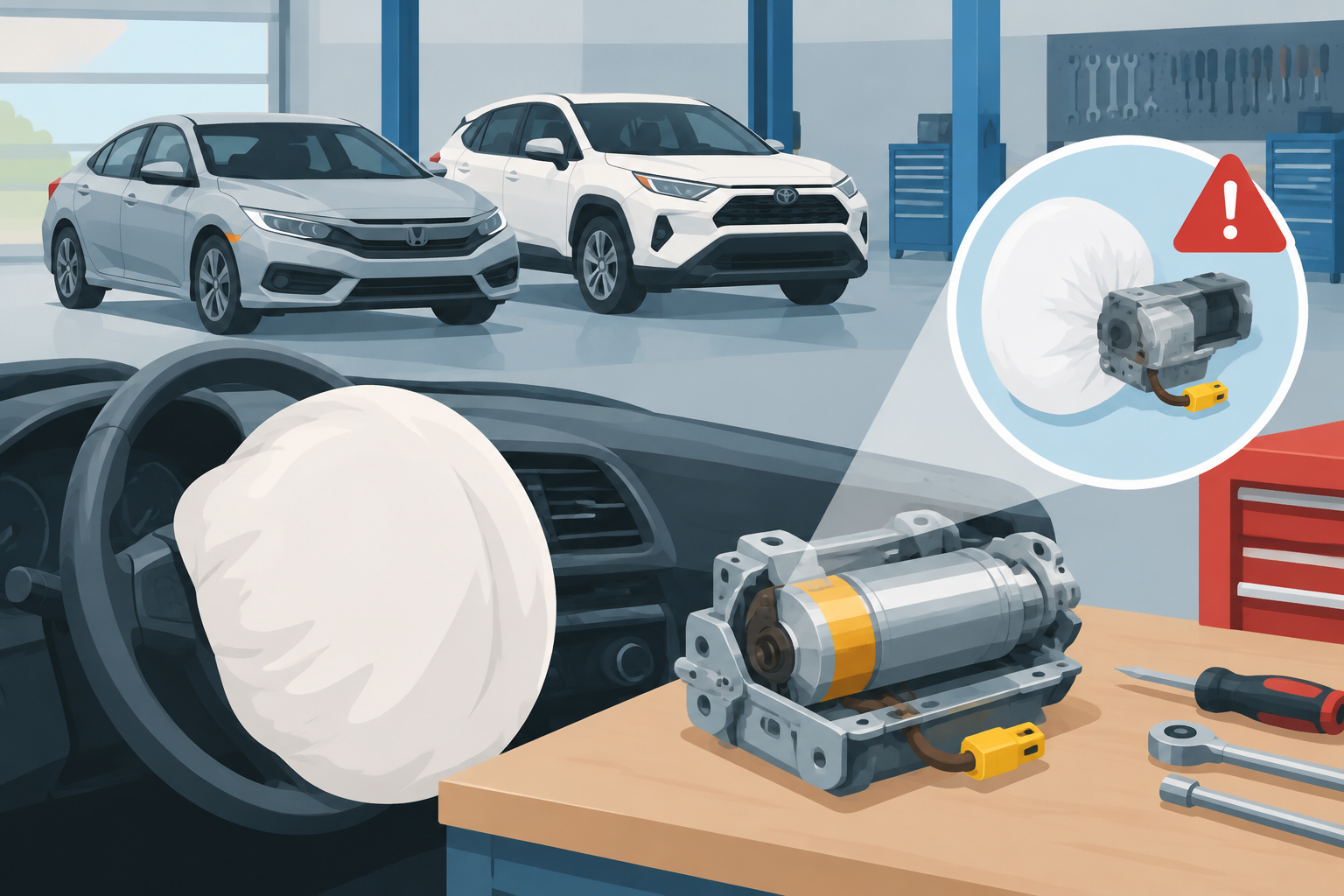
Honda and Toyota Takata Airbag Recall: Is Your Car Listed?
Quick answer: Honda and Toyota are recalling about 1.1 million US vehicles over Takata airbag rupture risk, according to a report dated November 23, 2026. To see whether yours is included, enter your 17-character VIN on NHTSA’s recall site. If a recall is open, the dealer repair is free.
Honda and Toyota have announced a recall of about 1.1 million vehicles in the US because Takata airbag inflators can rupture. Latin Times reported the news on November 23, 2026. If you drive a Honda, Acura, Toyota, or Lexus, check your VIN this week.
The headline figures are all we can confirm right now. We have no model and year list to share, so the most reliable way to know is to look up your own vehicle.
What was reported
The report says Honda and Toyota are recalling roughly 1.1 million vehicles in the US over the risk of Takata airbag rupture. We have no more detail than that, so we won’t guess at specific models or build years.
Takata airbag recalls have been running in the US for years, and they are widely described as the largest auto recall in US history. This new round means some vehicles are still being added or are still waiting on repairs.
Why a ruptured inflator is dangerous
An airbag inflator is a small metal canister. In a crash, it ignites a propellant that fills the bag with gas in a fraction of a second. The metal housing is built to contain that burst.
In the affected Takata inflators, the propellant can break down over time, especially after long exposure to heat and humidity. A degraded inflator can burn too fast. The pressure can burst the metal canister and throw sharp fragments toward the driver or passenger.
That is why this defect has been linked to deaths and serious injuries in the US. The airbag is meant to protect you, but a ruptured inflator can become the source of the injury.
Why age and climate matter
The risk grows as the inflator ages. Vehicles that have spent years in hot, humid places have long been treated as higher concern. A car in a cooler state is not automatically safe, though. If your VIN shows an open recall, treat it as real.

How to check your VIN
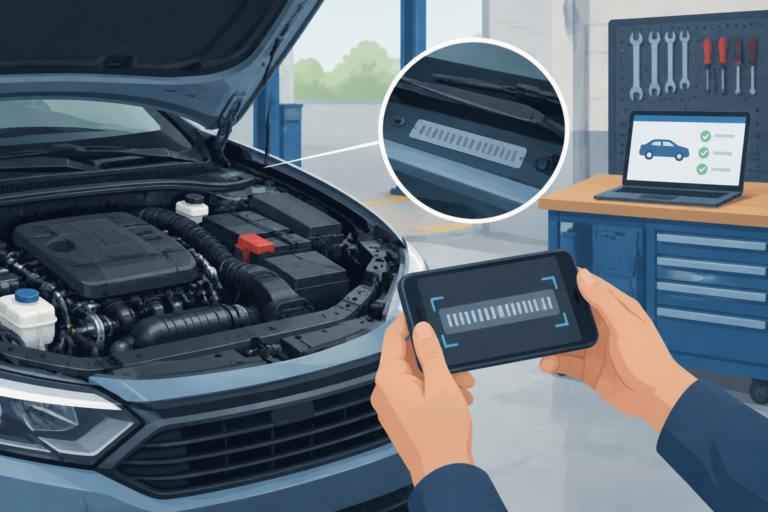
You need your 17-character Vehicle Identification Number. You can find it in any of these places:
- On the lower corner of the dashboard on the driver’s side, visible through the windshield.
- On the sticker inside the driver’s door jamb.
- On your registration card or insurance paperwork.
Then follow these steps:
- Go to the official recall lookup at nhtsa.gov/recalls and enter your VIN.
- Read the result. It lists any open recalls, not only airbag ones.
- Check the manufacturer’s own recall page too. Honda, Acura, Toyota, and Lexus each have a VIN lookup on their sites.
- If you want the model, engine, and open recalls in one place, you can decode your VIN and see open recalls.
If you are unsure of the exact year or trim, you can also check recalls and owner complaints for your car by make and model. A VIN search is still the most accurate, because recalls often apply only to certain build dates.
What to do if your vehicle has an open recall
Call a dealer for your brand and book the repair. Federal rules require manufacturers to fix safety recalls at no charge to the owner, so you should not pay for the inflator replacement.
- Have your VIN ready when you call.
- Ask whether the replacement parts are in stock. Parts shortages have slowed Takata repairs before.
- Ask how long the repair will take and whether a loaner or rental is offered.
- Keep the paperwork once the work is done.
When you should stop driving
Some Takata recall notices carry a do-not-drive warning. If your notice or the NHTSA lookup says so, follow it. Do not keep commuting in the car while you wait for an appointment. Ask the dealer about towing or a mobile repair, and ask the manufacturer what help it offers.
If your notice has no such warning, schedule the repair as soon as you can rather than waiting for your next oil change.
If you bought the car used
Recall notices go to the registered owner on record. If you bought the car used, the letter may have gone to a previous owner. A VIN lookup does not depend on the mail, so run it yourself.
Do the same for a car you plan to buy. Look up the VIN before you sign. If you are choosing between two models, you can compare recalls and safety ratings side by side.
While you are at the dealer
A recall visit is a good time to mention other symptoms. A flashing check engine light or a grinding noise when braking should not wait. Recall work covers only the recalled part, so other repairs are billed normally.
Frequently asked questions
Is the Takata recall repair really free?
Yes. Manufacturers must repair safety recalls at no cost to you. If a shop quotes you a price for the recalled inflator, call the manufacturer’s customer line.
Do I need to wait for a letter?
No. You can check your VIN any time on NHTSA’s recall site. Letters can be delayed or sent to a past owner.
Can I just disable the airbag?
Don’t try that yourself. Airbag systems are safety-critical and contain explosive components. Have a certified technician handle any work, and ask the dealer for advice if parts are delayed.
My VIN shows no open recall. Am I done?
For now, yes. Recalls can be added later, so check again once or twice a year and whenever you buy a used car.
Does this affect only Honda and Toyota?
This report names Honda and Toyota. Many automakers used Takata inflators over the years, so check any vehicle you own, whatever the badge.
This guide is general information. For safety-critical repairs, have your vehicle inspected by a certified mechanic.
One Comment
Comments are closed.